
Virtual Try-On
What Would I Look Like With Earrings? How to See Before You Buy
The surest way to know is to see the pair on your own face. You can do that in a shop mirror, with a camera try-on that follows your ear as you move, or by uploading a photo of yourself and a photo of the earrings to a photo try-on, which gives you a still picture you can keep and compare. The Hues earring try-on works this way and returns the picture in about 30 seconds. If none of those is to hand, a paper cut-out held at your earlobe gets you surprisingly close on length.
Below is how each method works, what it is good and bad at, and the two things worth checking whichever one you use: how long the earring hangs and how big it reads next to your face.
Four ways to see earrings on you
- A shop mirror. Still the most honest view of weight and movement, because the pair is actually on your ear. The catch is that you can only try what that shop has in stock.
- A camera (AR) try-on. Some retailers' sites and apps draw the earrings over your live camera image, so you can turn your head and watch them swing. It only covers the pairs that retailer has set up for it.
- A photo try-on. You upload a photo of the earrings and a photo of yourself, and get back an image of you wearing them. It works for any pair you can find a clear picture of, including one from a different shop, and the result is a still you can keep.
- The paper test. Cut out a shape the size of the earring, using the drop length or hoop diameter from the listing, tape it at your lobe and look in the mirror. Crude, free and good for one question: is it too long?
Try earrings on your own photo
With a photo try-on you need two pictures. The first is the earrings: a listing photo is fine, or one you took on a plain surface. The second is you, side-on or at three-quarters, with the ear you want to see uncovered. Hues places the pair on your earlobe at a believable size in about 30 seconds.
Because the result is a still image, comparing is easy. Run three pairs on the same photo of yourself and look at them side by side, or send them to the friend whose opinion you trust. That is the part a mirror cannot give you.
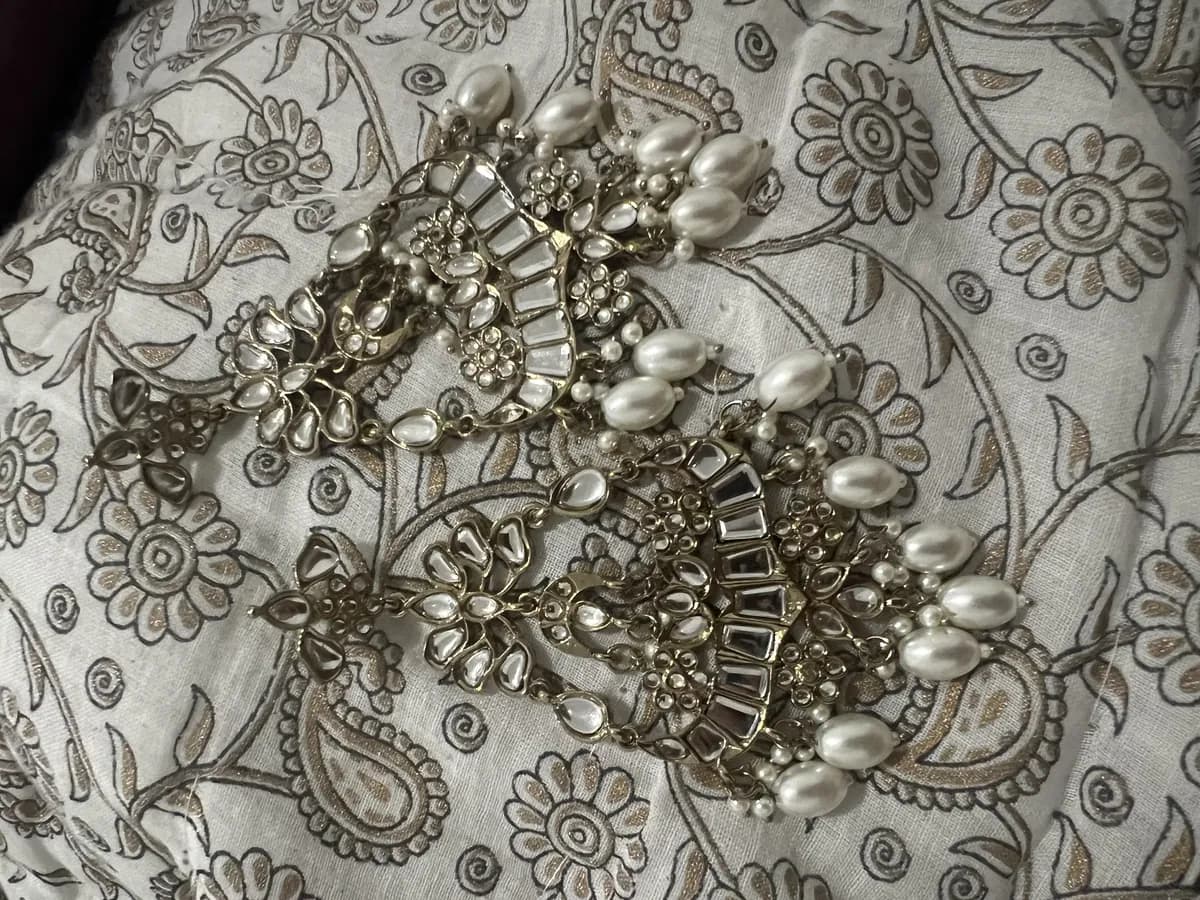 Starting photo
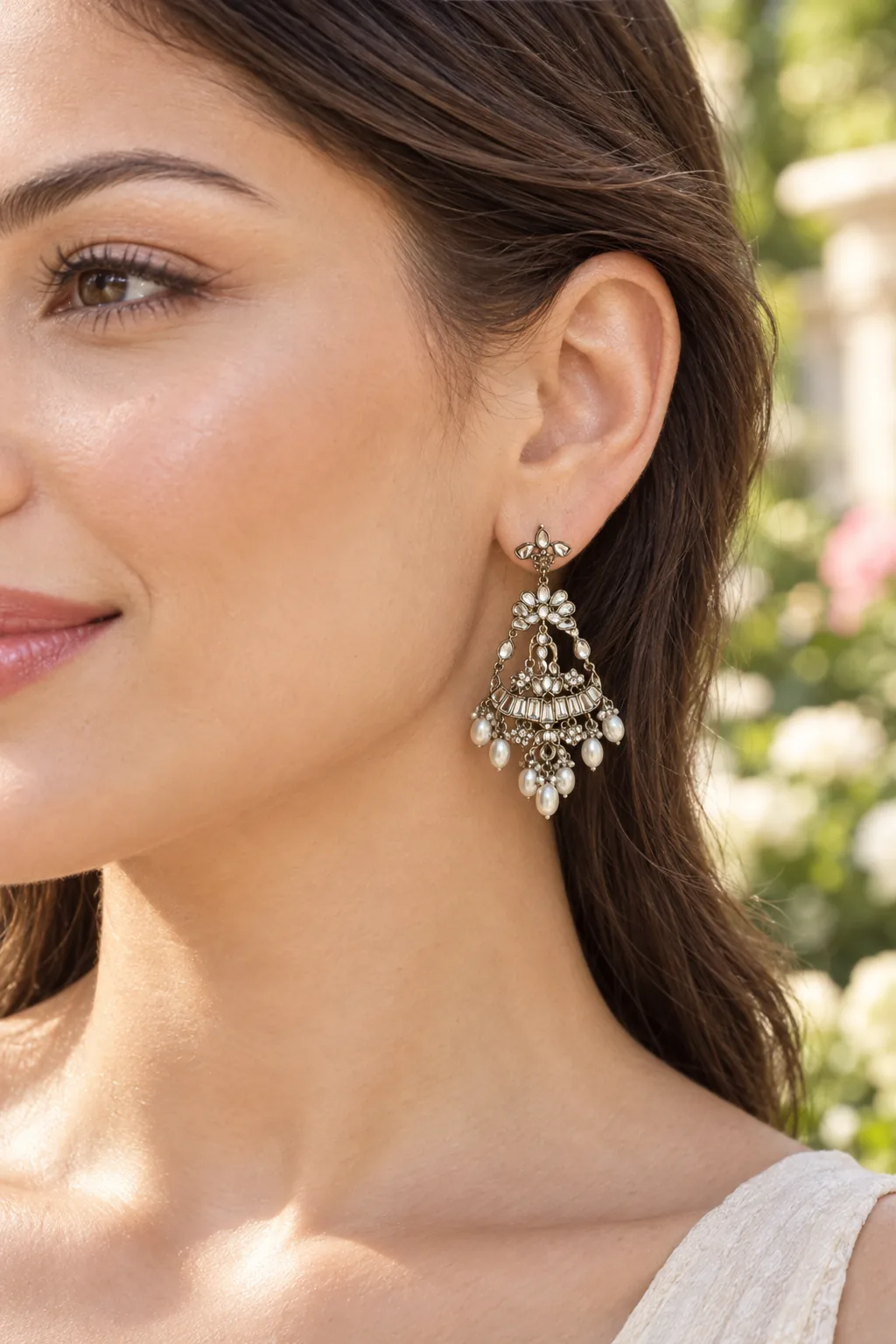 Made with Hues
Which earring length suits your face?
Stylists use a few rules of thumb, and they are worth knowing as a starting point rather than a verdict. The idea behind all of them is contrast: an earring that repeats the shape of your face makes that shape stronger, and one that goes against it balances it.
- Round face: longer drops and angular shapes add length.
- Long or oblong face: studs, clusters and wider hoops add width.
- Heart-shaped face: teardrops and chandeliers that widen at the bottom balance a narrower chin.
- Square face: hoops and rounded drops soften a strong jaw.
- Oval face: most shapes work, so pick by outfit and occasion.
Size: how big will it look on you?
Listings give a hoop's diameter or a drop's length in millimeters, and millimeters are hard to picture. Two quick checks help. Put a ruler against your jaw in the mirror and see where the drop length lands. Or compare the number with our printable earring size chart, which shows common stud, hoop and drop sizes at actual size.
Hair changes the picture too. A long drop that looks dramatic with hair tied back can all but disappear under loose hair, so take your try-on photo the way you usually wear it.
Earrings for men
Most men who wear earrings start with a small stud or a slim hoop, in one ear or both. The size question matters even more here, because a few millimeters decide whether a stud reads as subtle or as a statement. A photo try-on is a low-risk way to answer it: try a 4 mm and a 6 mm stud, or a huggie against a larger hoop, on the same photo and compare.
Photo tips for a try-on that looks real
- Daylight from a window, facing it, gives the most natural result
- A three-quarter angle shows both the lobe and how the earring sits against your jaw
- Hair tucked behind the ear, or pinned up, so the lobe is clear
- No earrings in the photo already, and no beauty filter
- A sharp photo from a normal distance: a selfie at arm's length is enough