
Virtual Try-On
How to Try On a Watch Online Before You Buy
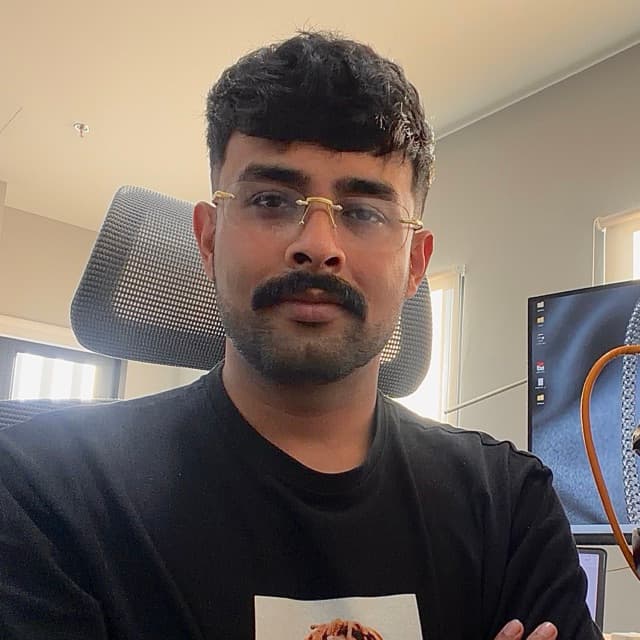
Measure your wrist, use that to shortlist case sizes, check each watch's lug-to-lug length, and then look at the shortlisted watches on a photo of your own wrist. The measuring narrows the choice; the try-on settles it, because a 40 mm and a 42 mm case look almost the same in a product photo and quite different on an arm.
Step 1: Measure your wrist
Wrap a soft tape or a strip of paper around your wrist just above the wrist bone, where a watch sits, and read the length. Write it down in both inches and centimeters; watch listings use either.
Step 2: Shortlist by case size and lug-to-lug
As a starting point, a 6.5 to 7 inch (16.5 to 17.8 cm) wrist usually suits a case of about 38 to 42 mm. Smaller wrists suit smaller cases, larger wrists can carry more. Our watch size chart has the full table, drawn from the guidance several watchmakers and retailers publish.
Then check lug-to-lug length, the distance from the tip of the top lugs to the tip of the bottom ones. It decides whether the watch overhangs the flat top of your wrist, and it is why two 41 mm watches can wear very differently.
Reading a watch spec sheet
Four numbers on a listing tell you most of what you need. Case diameter is the width of the case, usually measured without the crown. Lug-to-lug is the length from the top lugs to the bottom ones, and it decides whether the watch overhangs your wrist. Thickness tells you whether it will slide under a shirt cuff; under about 10 mm reads as slim, and many sports and diving watches run 12 mm or more. Lug width is the gap the strap fits into, and it matters if you plan to change straps.
A watch can look large or small for reasons that are not on the spec sheet. A wide bezel makes the dial look smaller, a white dial looks bigger than a black one of the same size, and a bracelet that tapers towards the clasp makes the whole watch look more compact.
Step 3: See it on your wrist
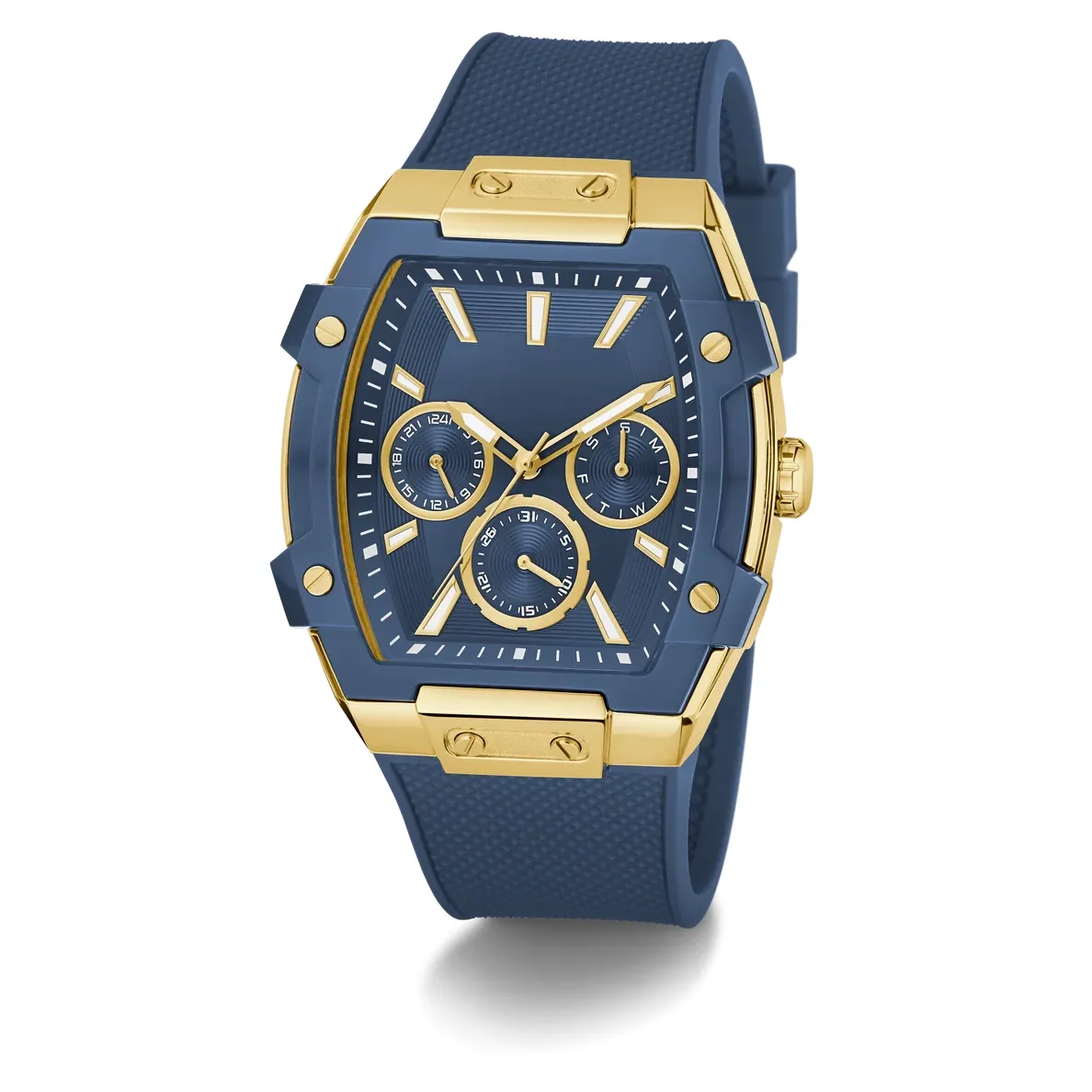
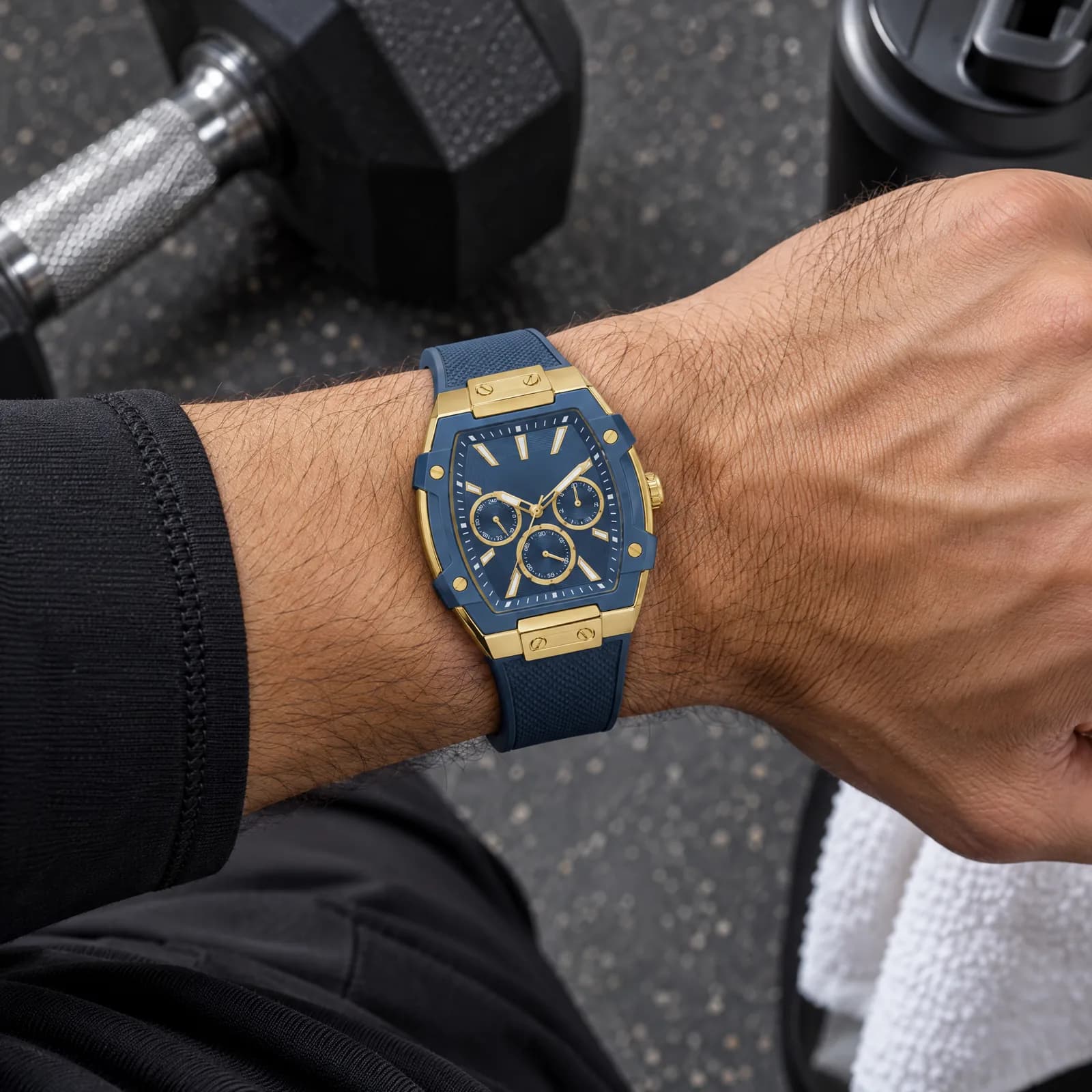
Some watchmakers offer a camera viewer on their own site that places their models on your wrist in real time. Useful, but limited to that brand. A photo try-on works with any watch you can find a clear picture of: you upload the watch and a photo of your bare wrist, and Hues returns an image of the watch on you in about 30 seconds.
 Starting photo
 Made with Hues
Taking a wrist photo that works
- Take your current watch off: the try-on needs a bare wrist
- Shoot the top of the wrist with the hand relaxed, palm down
- Include some of the forearm, so the scale reads correctly
- Use daylight and keep the wrist in sharp focus
- Wear the sleeve you usually wear if you want to see the cuff
Compare two sizes on the same photo
The most useful thing you can do with a try-on is a straight comparison. Run the 40 mm and the 42 mm version of the same model, or two different watches you are torn between, on one wrist photo and put the results side by side. Differences that are invisible on a spec sheet are obvious that way.
Trying on a watch you can't get to a boutique for
Plenty of watches are hard to see in person: the nearest authorized dealer is far away, the model is on a waiting list, or you are buying pre-owned from another country. A photo try-on is a reasonable stand-in for a first look. Use a clear, front-on photo of that exact reference, so the dial and bezel are right, and judge proportion rather than finish, which no photo reproduces perfectly.
What a try-on can't tell you
A picture shows proportion. It cannot tell you how heavy a steel bracelet feels by evening, whether a thick case catches on a shirt cuff, or how a clasp sits against the underside of your wrist. Use the try-on to narrow the choice, then buy from a seller with a fair return policy in case the weight or comfort is not what you expected.