
Virtual Try-On
How to Choose a Watch as a Gift: Size, Style and Budget
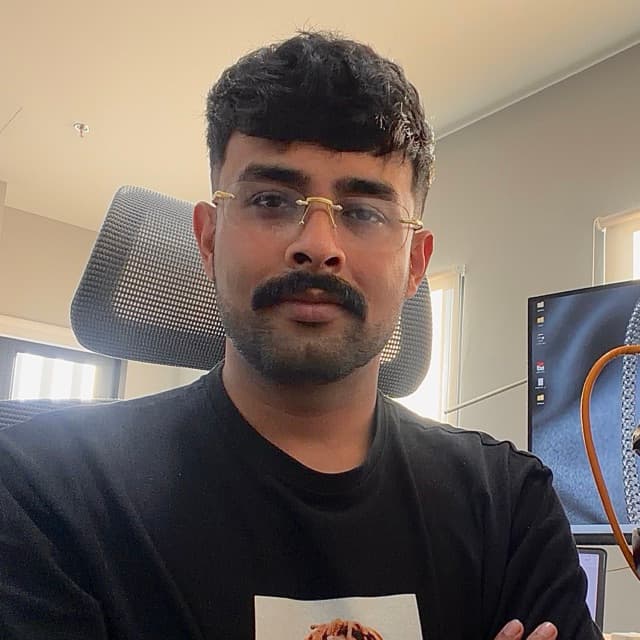
Start with their wrist, then how they spend their days, then what they already wear. The wrist gives you the case size. Their days give you the style: a dive watch for someone who's outdoors a lot, a slim dress watch for someone who lives in a suit. The watch or jewelry they wear now shows you the metal and finish they like. Work those out before you look at brands and the shortlist gets short fast.
Find their wrist size without asking
If they already wear a watch on a strap, look at the hole that is most worn: that is where they buckle it. Lay the strap flat, buckled on that hole, and measure around the inside with a strip of paper or a soft tape. That is a good estimate of their wrist size.
No watch to measure? Ask a friend or relative who might know, or hold your wrist next to theirs and compare. If you really can't find out, buy a case of about 40 mm on a strap that adjusts easily. It sits in the middle of the range for average wrists, so it's the safest guess.
Match the case size to the wrist
As a starting point, a 6.5 to 7 inch (16.5 to 17.8 cm) wrist suits a case of about 38 to 42 mm, wrists under 6 inches suit 34 to 36 mm, and wrists of 7.5 inches or more can carry 42 to 46 mm. Men's watches typically run 38 to 46 mm and women's 26 to 36 mm, though plenty of people wear sizes outside those ranges by choice. Our watch size chart has the full table and printable circles.
Check the lug-to-lug length too, the distance from the top lugs to the bottom ones. If it is longer than the flat top of the wrist, the watch overhangs and looks too big, whatever its diameter. Go a millimeter or two smaller for a dress watch and a little larger for a sports watch.
Choose a style that fits how they live
- Dress watch: thin, simple dial, leather strap. For someone who wears a suit or dresses up often; it slides under a shirt cuff.
- Dive watch: rotating bezel, strong water resistance, steel bracelet or rubber strap. The most versatile style, from the office to the beach.
- Field or pilot watch: large, clear numerals on a matt dial. Easy to read and casual.
- Chronograph: a stopwatch built into the dial, with extra sub-dials and pushers. Sporty, and usually thicker.
- Smartwatch: for someone who wants fitness tracking and notifications. Check it works with their phone before you buy.
Quartz or automatic?
A quartz watch runs on a battery, keeps very accurate time and needs nothing beyond a new battery every few years. An automatic is mechanical and winds itself as it's worn. Leave it off the wrist for a day or two (it depends on the model) and it stops, and it won't keep time as well as quartz. People who like automatics like them for exactly that: there's a small machine on their wrist. So if the person you're buying for takes things apart to see how they work, get the automatic. If they just want a watch that's right every morning, get quartz.
Strap or bracelet: plan the fit
A leather or fabric strap adjusts with its holes, so it fits most wrists out of the box. A metal bracelet usually has to be sized by removing links, which the seller or a jeweler can do; keep the spare links in the box. If you guessed the wrist size, a strap is the safer choice, and most watches let you change the strap later.
See the watch on their wrist before you buy
A product photo makes a 40 mm and a 44 mm case look almost the same. A watch try-on shows the difference: upload a photo of the watch and a photo of their bare wrist, and Hues places the watch on it in about 30 seconds. Use a photo you already have where the top of the wrist is clear, or your own wrist if it is a similar size.
Run two sizes, or two watches you are torn between, on the same photo and compare. The try-on shows proportion; confirm the case size and lug-to-lug length against the chart.
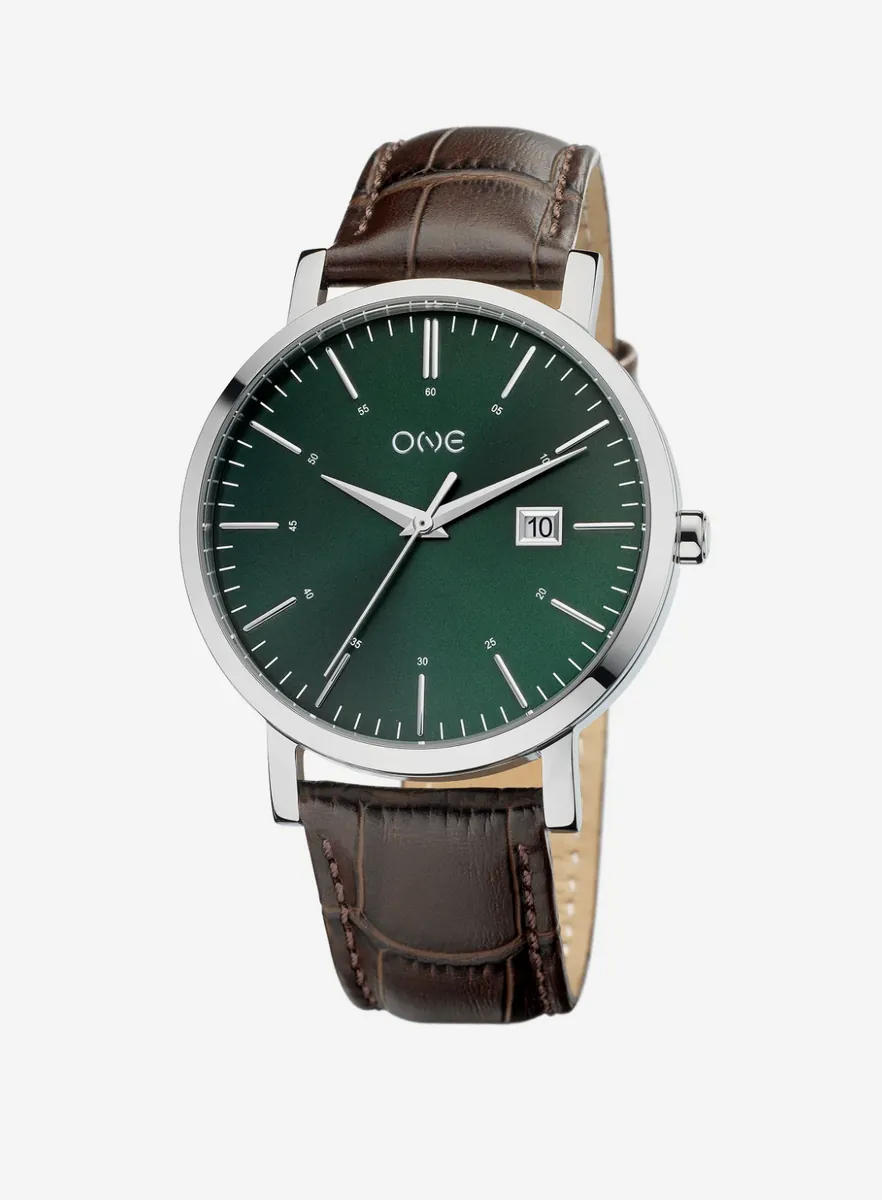 Starting photo
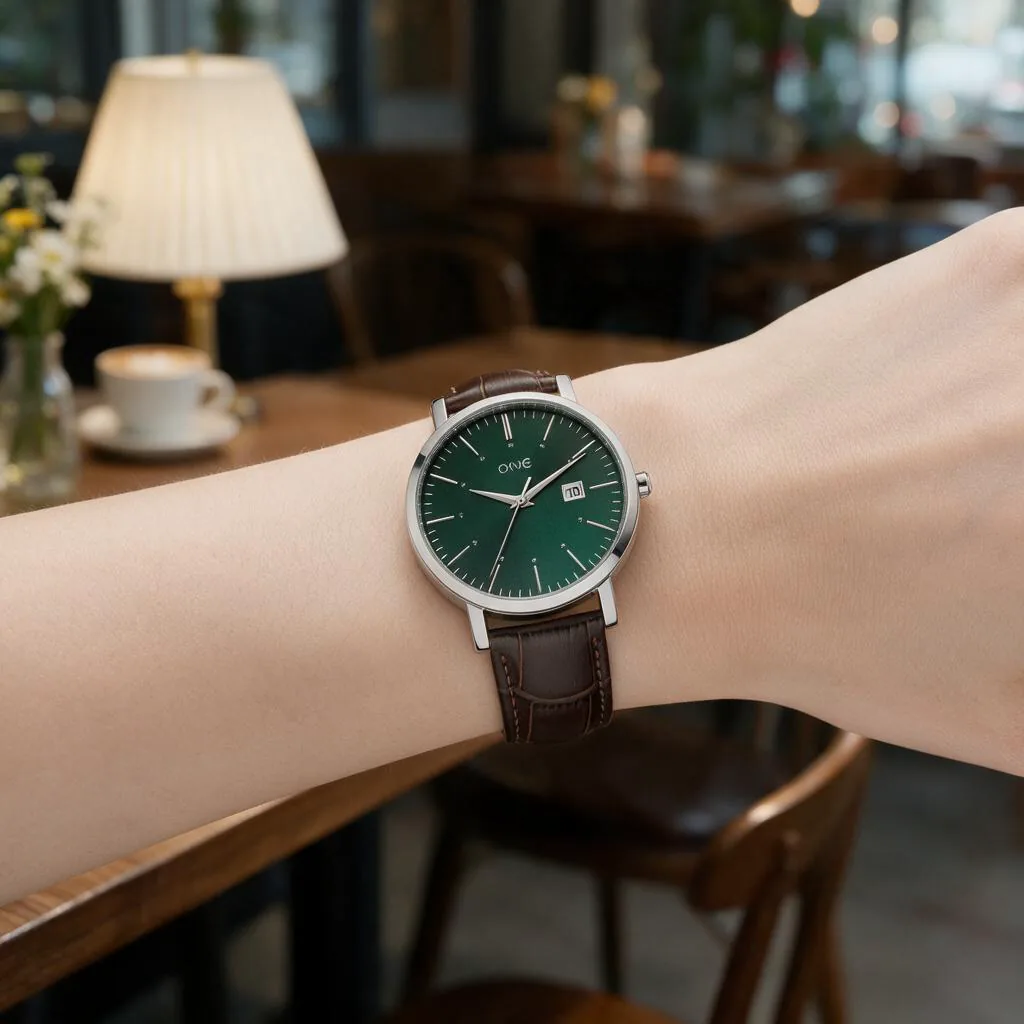 Made with Hues
Setting a budget and buying safely
- Decide the budget first; at every price there are good quartz watches, and mechanical watches start a little higher.
- Buy from an authorized dealer or a seller with a clear warranty, especially for well-known brands that are often counterfeited.
- Ask for a gift receipt and check the return window runs past the day it will be opened.
- Hold off on engraving until they have seen it; engraved watches are often not returnable.
- Keep the box, papers and warranty card together. They matter for servicing and for resale.